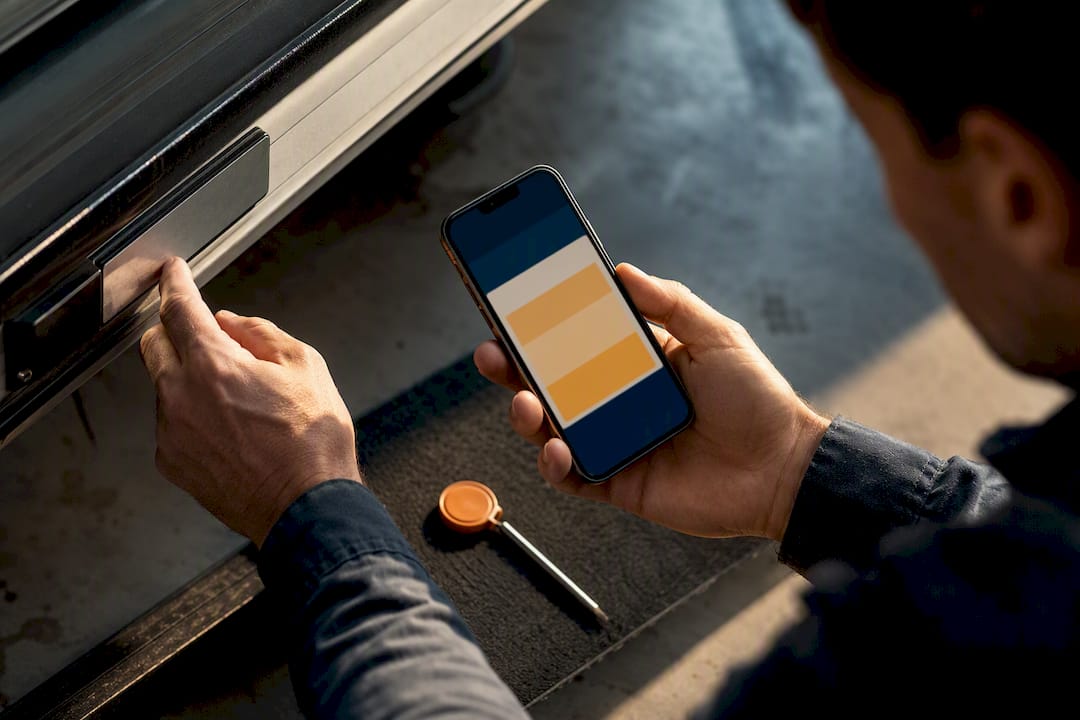
Yes, you can check an RV’s history using its VIN. Many RVs from more recent decades carry a 17-character VIN that unlocks title brands, liens, recalls, accident flags, and decoded chassis specs through free and paid tools. Start with the NHTSA vPIC decoder and an NMVTIS-approved provider, then cross-check with NICB VINCheck for theft records. Just know that coach-level appliance recalls and some older units won’t show up in any VIN-backed database.
TL;DR:
- A confirmed 17-character VIN provides the most reliable source of history, but some older RVs and non-standard formats may lack complete digital records.
- Cross-checking with NMVTIS-approved providers and NICB VINCheck is essential for uncovering salvage brands, liens, or theft reports before visiting.
- Odometer discrepancies, salvage titles, or active liens found in reports require professional inspection, payoff documentation, or repairs before proceeding with a purchase.
- VIN location varies by RV type, with motorhomes displaying VINs on the dashboard or door jamb, while towables have theirs on the tongue or data plate near the entry.
- A clean VIN report does not guarantee overall condition; a physical inspection and moisture testing remain necessary for a thorough evaluation.
Table of Contents
- How to Check RV VIN History Step by Step
- What Shows Up in an RV VIN History Report
- Where’s the VIN on My RV, and Does It Match My Title?
- What VIN Checks Miss (And How to Fill the Gaps)
- What to Do After You Run the VIN Check
- Using VIN Checks While Shopping or Selling on a Marketplace
- The Gap Between a Clean Report and a Good Buy
- Ready to Put Your VIN Check to Work?
- Sources
How to Check RV VIN History Step by Step
Running a proper RV VIN report takes ten minutes if you follow the sequence in order. Skipping steps is how buyers end up with a “clean” report that missed something obvious.
- Confirm the VIN has exactly 17 characters. Older RVs and some towables use shorter, non-standard formats, and mismatched lengths are the first sign something’s off.
- Decode it with NHTSA’s vPIC tool. This free federal database maps the VIN to chassis maker, model year, and build details, so you can confirm the seller’s listing matches the actual vehicle before you spend a dime on anything else.
- Run an NMVTIS-backed history check. NMVTIS is the federal system that aggregates state title data, and it’s the authoritative source for salvage branding, junk titles, and odometer readings. Many NMVTIS-approved providers offer a free preview that flags whether a record exists, then charge a small fee for the full report with title brand and lien detail.
- Cross-check with NICB VINCheck. This free theft-record lookup tells you if the RV has been reported stolen and not recovered. It won’t show liens or accident history, so treat it as one piece of the puzzle, not the whole picture.
- Read the initial flags before you go further. A salvage brand, an open lien, or a mileage inconsistency should stop you before you schedule a viewing, not after.
Pro Tip: Run the free NMVTIS preview and NICB check before you even message the seller. If either one throws a flag, you’ve saved yourself a wasted trip and an awkward negotiation.
What Shows Up in an RV VIN History Report
A full NMVTIS-backed report reads like a paper trail of everything that’s happened to the vehicle since its first title was issued. Each section tells you something different about condition, value, and risk.
- Title brands — salvage, rebuilt, junk, or flood designations that signal the RV was declared a total loss at some point, usually cutting resale value by a significant margin.
- Accident and insurance loss records — reported through state title data, these show whether an insurer paid out a claim, though severity details are often thin.
- Odometer timeline — a series of readings over time is far more reliable than a single snapshot; a gap or a mileage drop between records is the classic rollback signal.
- Open liens — any unpaid loan tied to the vehicle, which follows the RV even after a private sale if it isn’t cleared first.
- Recall status — chassis-level campaigns tracked through NHTSA’s recall database, separate from coach or appliance recalls.
- Auction and salvage photos — some reports include images from insurance auctions, which can be more revealing than any written description.
Odometer discrepancies deserve extra attention on RVs specifically, since many sit unused for months between owners, and a “not actual mileage” flag on an odometer disclosure is a legal red flag, not a technicality.
Where’s the VIN on My RV, and Does It Match My Title?
VIN location depends heavily on whether you’re checking a motorhome or a towable, and mismatched numbers across the vehicle and paperwork are a dealbreaker.
- Motorhomes (Class A, B, C): Look at the driver-side dashboard, visible through the windshield, and the driver-side door jamb. The chassis rail near the front axle also carries a stamped VIN.
- Towables (travel trailers, fifth wheels, toy haulers): Check the tongue or A-frame near the front, and the manufacturer’s data plate near the entry door.
- Compare it against title, registration, and insurance documents. Motorhome VIN decodes often reflect the chassis builder (Ford, Freightliner, Mercedes) rather than the coach manufacturer, so confirm both identities separately.
- If numbers don’t match across the unit and paperwork, stop the transaction. A mismatch can mean a clerical error, but it can also mean a swapped VIN plate or a rebuilt title that wasn’t disclosed.
What VIN Checks Miss (And How to Fill the Gaps)
VIN-based reports are strong on title and chassis data but weak on everything happening inside the coach. Appliances, tires, and LP gas systems are often tracked through their own serial numbers rather than the vehicle’s VIN, so a propane heater or refrigerator recall can slip past a clean VIN report entirely. State reporting also varies. Not every state submits data to NMVTIS at the same speed or completeness, which is exactly why sticking with NMVTIS-approved providers matters more than chasing the cheapest report online. Pre-1981 RVs, and some non-standard VIN formats from smaller manufacturers, may have thin or nonexistent digital records no matter which tool you use.
- Request a physical inspection from an RVIA-certified mechanic before closing.
- Search the coach manufacturer’s own recall notices separately from NHTSA’s chassis database.
- Have a moisture meter test run on the roof and walls. Water damage rarely shows up in any title record.
- Ask for service and maintenance logs directly from the seller.
Pro Tip: A clean VIN report tells you the paperwork is clean. It says almost nothing about whether the water heater works or the roof leaks. Budget for an inspection regardless of what the report shows.
What to Do After You Run the VIN Check
A VIN report is only useful if it changes what you do next. Here’s how to turn flags into decisions.
- Title brand appears (salvage, rebuilt, flood)? Get a professional inspection with a written estimate for roof, frame, and moisture damage before you negotiate anything.
- Open lien shows up? Request payoff documentation or written lien release from the seller’s lender before any money changes hands. Never wire funds until the lien is confirmed clear.
- Odometer inconsistency flagged? Ask directly for a corrected odometer disclosure and compare it against service records showing mileage at each visit.
- Everything checks out? Still request maintenance logs and verify the seller’s identity matches the name on the title.
| Report Finding | Recommended Action |
|---|---|
| Salvage or rebuilt title | Professional inspection + written repair estimate |
| Open lien | Lender payoff letter or lien release before transfer |
| Odometer gap or rollback flag | Corrected disclosure + service record comparison |
| Clean report | Maintenance logs + seller identity verification |
Save every report and document you collect. If the deal falls through and you need to dispute anything later, a paper trail is your best protection.
Using VIN Checks While Shopping or Selling on a Marketplace
If you’re browsing listings, run the VIN check before you ever message the seller. Paste the VIN into the decoder, pull the free NMVTIS preview, and you’ll walk into that first conversation already knowing whether the vehicle’s history matches the ad. When a flag turns up, ask the seller directly for service records, restoration receipts, or lien-release proof. A seller who has nothing to hide will usually have that paperwork ready.
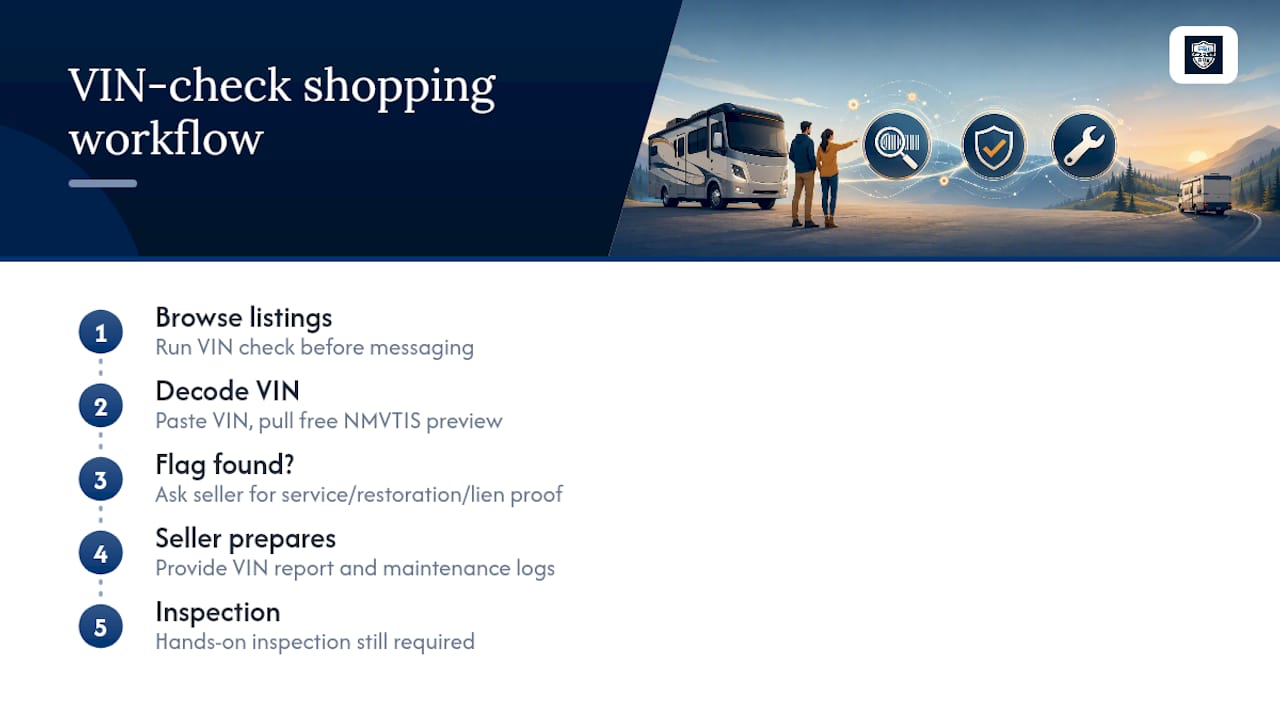
On the selling side, having your own VIN report and maintenance logs ready before you list speeds up every serious inquiry. Buyers who see you’ve already done the homework tend to move faster to an in-person viewing.
VIN checks confirm paperwork. They don’t replace a hands-on inspection, and treating a clean report as a green light to skip that step is how buyers end up with expensive surprises after closing.
The Gap Between a Clean Report and a Good Buy
Here’s what most buying guides won’t tell you plainly: a spotless VIN report is the floor, not the ceiling, of due diligence. It tells you the title’s clean and nobody’s reported the RV stolen. It tells you nothing about whether the slide-out motor grinds, whether the roof membrane is cracking, or whether the previous owner let it sit unwinterized through a hard freeze.

I’d argue the biggest mistake shoppers make is treating the VIN report as the finish line instead of the starting gun. The report exists to rule out the disqualifying stuff fast, salvage titles, active liens, stolen vehicles, so you don’t waste a Saturday driving three hours to look at something you should’ve skipped from your couch. Once it’s clean, the real work of buying an RV, the physical inspection, the moisture test, the conversation with the seller about why they’re selling, is just getting started.
Sellers benefit from this mindset too. If you’ve got nothing to hide, running your own VIN check and having the report ready before a buyer even asks shows you’re not the kind of seller worth being suspicious of. That’s worth more in a private sale than almost any other single thing you can do.
— Christopher
Ready to Put Your VIN Check to Work?
Once a VIN check comes back clean, the next step is finding a unit worth checking in the first place. Gently Used RVs lets you browse listings by RV type and location without creating an account, so you can narrow down Class A motorhomes, fifth wheels, or toy haulers before you ever run a single report.
Not sure which VIN location applies to your unit? The RV Types Guide breaks down where to find VIN plates by category, from Class B camper vans to travel trailers. And once a listing checks out, the RV Dealer Directory makes it easy to line up a professional inspection near the seller’s location before you commit to a viewing. Selling instead? List your RV for free and let buyers see your listing with the confidence a clean VIN history brings.
Sources
- Research Vehicle History | VehicleHistory (NMVTIS consumer page)
- Welcome to VIN Decoding :: provided by vPIC
- VINCheck® Lookup: Free Vehicle History Check
- NHTSA recall search